
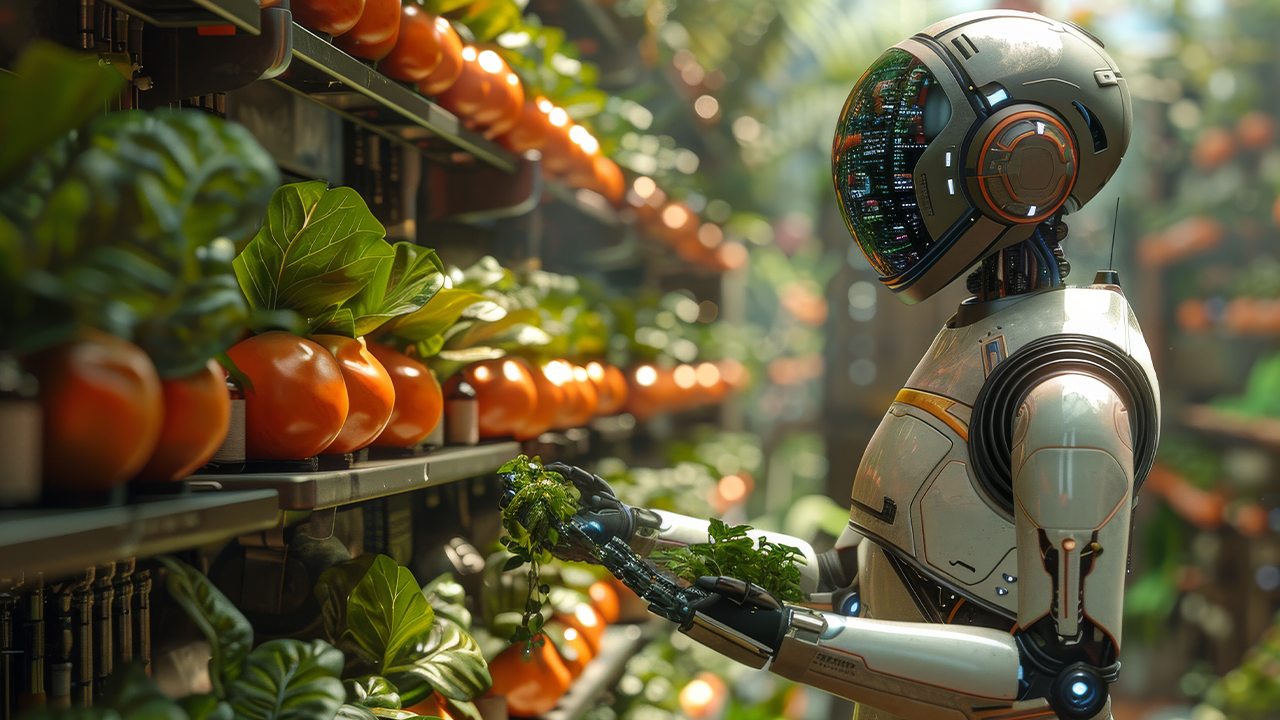
Feeding the Future: Tackling Global Food Security with AI Agriculture
07 Aug, 2024
- 11963 views




2016 - 2026 Copyright @ Graphie.
All Rights Reserved
As the world's population continues to grow, the demand for food is increasing. According to the United Nations, the world population is expected to reach 9.8 billion by 2050. This means that food production needs to increase by 70% to meet the demand. However, global food security is threatened by climate change, limited resources, and inefficient food production systems. Fortunately, artificial intelligence (AI) in agriculture is becoming a vital tool in the fight against global food insecurity. This article will discuss how AI can enhance food production efficiency, reduce wastage, and ensure the sustainable use of resources, paving the way for a food-secure future.
Konsultasi GRATIS tanpa Komitmen, dan temukan strategi terbaik untuk bisnis Anda.
CHAT SEKARANGEnhancing Food Production Efficiency
AI can help farmers increase crop yields and reduce the use of resources such as water, fertilizers, and pesticides. AI-powered sensors can monitor soil moisture levels, temperature, and nutrient levels, providing farmers with real-time data to optimize crop growth. AI algorithms can also analyze weather patterns, soil quality, and other factors to predict crop yields and optimize planting and harvesting schedules. This can help farmers reduce waste and increase efficiency.
Reducing Wastage
Food wastage is a significant problem globally, with up to one-third of all food produced being lost or wasted. AI can help reduce food wastage by predicting crop yields, optimizing supply chains, and reducing spoilage. AI algorithms can analyze data on weather patterns, soil quality, and other factors to predict crop yields and optimize planting and harvesting schedules. This can help farmers reduce waste and increase efficiency. AI can also help optimize supply chains by predicting demand and reducing spoilage during transportation and storage.
Ensuring Sustainable Use of Resources
AI can help ensure the sustainable use of resources by optimizing irrigation, reducing the use of fertilizers and pesticides, and promoting sustainable farming practices. AI-powered sensors can monitor soil moisture levels, temperature, and nutrient levels, providing farmers with real-time data to optimize crop growth and reduce water usage. AI algorithms can also analyze data on weather patterns, soil quality, and other factors to reduce the use of fertilizers and pesticides. AI can also promote sustainable farming practices by analyzing data on soil quality, crop rotation, and other factors to optimize farming practices and reduce the environmental impact of agriculture.
In conclusion, AI in agriculture is becoming a vital tool in the fight against global food insecurity. AI can enhance food production efficiency, reduce wastage, and ensure the sustainable use of resources, paving the way for a food-secure future. With the world's population expected to reach 9.8 billion by 2050, it is essential to embrace AI in agriculture to meet the growing demand for food


Recommended for you
Feeding the Future: Tackling Global Food Security with AI Agriculture
The Psychology Behind Match-3 Games: Why Ducky Pop is So Addictive
The Best Power-Ups and Boosters in Ducky Pop: When and How to Use Them
Tonework: The Future of Personalized Beauty is Here
Unlock the Hidden Worlds: Exploring the Different Themes and Levels in Ducky Pop
From Idea to Launch: A Step-by-Step Guide to Building Your Dream Startup
The Hydrogen Fuel Frontier: Aryanto Misel's Nikuba Tech Shakes the World
AI to the Rescue: Solving Urban Congestion with Smart Public Transportation
Ducky Pop: A Splash in the Match-3 Pool
Eye-Catching Profits: How Smart Design Turns Browsers into Buyers
The Digital Revolution: How Mobile Apps Have Transformed Our Daily Lives
The Future of Website Design: AI-Driven Tools Transforming User Experience
What Are the Most Challenging Obstacles in Ducky Pop and How to Overcome Them?
Ducky Pop: A Splash in the Match-3 Pool
The Rise of NFTs in the Industry: Revolutionizing Digital Assets and Innovation